Whose Service?

[As ever, you can read this on the BBC News website]

Much of the debate that followed last week’s publication of the Digital Britain report has focused on the proposal to take some of the income from the TV Licence and make it available to fund universal broadband access, with a suggestion that once this has been accomplished £130m a year could be used to support local news services and perhaps even children’s programming provided by people other than the BBC.

Within the BBC there is a strong feeling that this would be a very bad idea because the corporation’s resilience comes in part from having a guaranteed source of funding that does not rely on politically-motivated decisions of the government of the day. The fear is that once the licence fee is shared there will be nothing to stop it being carved up to meet short-term policy objectives.

Others share this view. The Guardian’s Polly Toynbee is vehemently opposed to what she calls ‘deliberately breaching the unique status of the BBC’ and asks if the destruction of the BBC is ‘really going to be this Labour government’s legacy?’
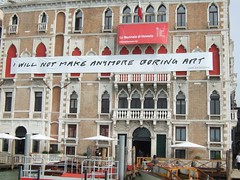
Continue reading “Whose Service?”

Digital Britain: Engaging with the Internet

I got home at 1500, checked out the Digital Britain website, then fired up the Parliament channel at 1530 to see new Culture Secretary Ben Bradshaw present the Digital Britain White Paper (according to BERR) or Final Report (according to DCMS). And then I tweeted while I read, before sitting down to write this, which I filed with the BBC at around 1730 (it should be up soon). So it’s a bit rough and there may be things I’ve missed… the joys of journalism, I suppose.

We live in a largely digitised country, so in one sense the Digital Britain report is an exercise in ensuring that the legal and regulatory system catches up with the lived reality for most of the UK population rather than a visionary document describing a far-distant future.

As such it is a serious attempt to ensure that government makes the best possible use of the network in serving us all, and that businesses offering access to the internet or providing services and content over the network are regulated, rewarded and cajoled as necessary to ensure that the UK does not fall even further behind the rest of the industrialised world.

Although I criticised the interim report when it was published in January because it had been written behind closed doors and offered few opportunities for consultation and engagement for those outside the charmed circle of invited experts, it is clear that Stephen Carter and his team have listened to and taken notice of the extensive debate around their initial proposals. The result, though far from perfect, offers a good basis for work on the detail of implementation and legislation, and there are clear signs that those who want to engage will be able to do so.

There are suggestions for how to liberalise and improve access to wireless infrastructure, with potentially transformative proposals to shake up spectrum allocation to build a next generation mobile network offering 50mbps in cities and 5mbps in rural areas.

Continue reading “Digital Britain: Engaging with the Internet”

Pixels and Paintbrushes

[You can also find this on the BBC News website, of course]

The 53rd Venice Art Biennale has just opened, a massive exhibition of contemporary art from around the world that takes over large parts of the city every two years from June to November and turns it into a showcase for the new, the experimental, the exciting and the just plain weird.

And I do mean weird.

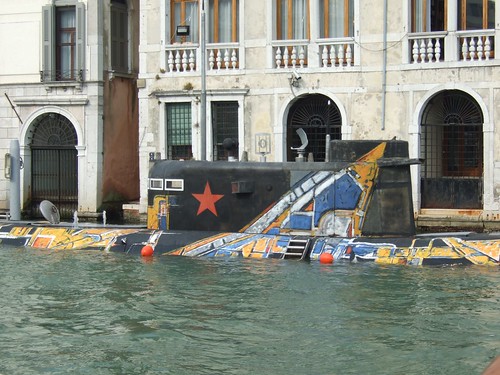
Hidden depths There’s a semi-submerged Russian submarine in the Grand Canal, an Icelandic artist is going to spend the next six months painting a series of bad portraits of a cigarette-smoking model, and a group of Nordic artists are exhibiting a very life-like corpse floating face-down in a swimming pool while a group of naked men sit on deckchairs nearby.

Seventy-seven countries are taking part, many of them exhibiting their work in purpose built pavilions in the public gardens of the Giardini while others can be found in the former shipyard of the Arsenale or scattered across palaces and warehouses throughout the city.

As well as the national pavilions there are forty-four associated exhibitions and events, and nearly one hundred individual artists have been invited to show work in the central ‘Making Worlds’ exhibition.

Continue reading “Pixels and Paintbrushes”

Bing or Bust

I wrote this last week and forgot to post it here – it’s on the BBC News site and I’ll add it here when I get home:

Will Bing boom or be a big bust?

While sales of hardware may be suffering greatly it seems that the general economic gloom has not yet diminished the ambitions of the larger technology companies to give us new products and services online.

In the last few weeks we have had Wolfram Alpha offering a way to search structured data and provide results in a form suitable for further computation. We have had Google Squared promising a simple way of pulling organised data from websites into a spreadsheet style format.

Finally, a new controller-free interface for the Xbox 360 games console from Microsoft that – the company hopes – will open up gaming to the millions who are intimidated by the complexity of current controllers.

And now, after years of effort, billions of dollars worth of investment and several failed attempts, Microsoft has launched Bing, a search engine that it thinks has a chance of unseating Google and which it would like us to think of as a “decision engine.

read the rest..

Post-Biennale Blues


The Biennale’s new office…

Originally uploaded by BillT.

I’ve just finished four days in Venice for the Vernissage of the 2009 Biennale with the BBC World Service Digital Planet team of Gareth Mitchell and Colin Grant.

We had an excellent time, and it’s always hard to leave this wonderful city.

There are some photos on Flickr, including some nice pictures of our interview with John Cale whose work is in the Welsh Pavilion, and I also made some AudioBoos while we were there:

On my way
Listen!

Arriving in Venice
Listen!

The Wedding at Cana (Peter Greenaway)
Listen!

Breakfast with Gareth and Colin
Listen!

Giardini
Listen!

Back to Arsenale
Listen!

All Done
Listen!

Access for All

[As ever, this can be read on the BBC News website]

President Sarkozy of France recently managed to get his ‘Création et Internet’ law passed by the National Assembly, and if all goes well in the Senate then French internet users will soon find their activities being supervised by HADOPI, the grandly named ‘Haute Autorité pour la Diffusion des Œuvres et la Protection des Droits sur Internet.’

The rights it is concerned with are not those of ordinary net users but of copyright owners, and especially the large entertainment companies that have lobbied so hard and so successfully for the power to force internet service providers to terminate the accounts of those accused of downloading unlicensed copies of  music, films and software.

Once HADOPI is up and running rights holders will be able to go to it with evidence of illegal downloading, and it will issue banning orders to ISPs without any need for tiresome court proceedings.

Continue reading “Access for All”

Touching the past

I’ve just returned home after an evening at St John’s College where we had a small supper following my talk at the Computer Lab this afternoon – it will be online soon, by the way.  It was a delightful event, especially because Maurice Wilkes joined us.

Maurice Wilkes
Maurice Wilkes

And I recorded an AudioBoo on the way home..

Listen!

The 10 Cultures Problem

It’s fifty years since CP Snow gave his famous lecture on The Two Cultures at the Senate House in Cambridge. Tomorrow I make my contribution to the University’s 800th anniversary celebration with a lecture on ‘The 10 Cultures Problem’ at the Computer Laboratory.

And it’s featured on the University home page. No pressure then…

University of Cambridge home page

When the new becomes old

[As ever, you can read this on the BBC News website]

Sometimes on a  Monday afternoon I find myself sitting a desk in a small room in a fairly nondescript office block near Cambridge railway station waiting for the network engineers at Bush House to call me up on an ISDN line so that I can take part in Digital Planet, the World Service technology programme I appear on most weeks.

It’s the same studio used by contributors to many other radio programmes. Every time I hear that the ‘Thought for the Day’ on Radio 4’s Today is coming from Cambridge I think of  the yellow panels, the squeaky chair and the 1930’s style microphone I know so well.

While I prefer to be in studio C21 so that I can sit opposite presenter Gareth Mitchell and watch producer Michelle Martin through the glass, it isn’t always possible – this week my son has his first GCSE exams and I want to be around to comfort him after his RE and Maths papers, so I’ll do the show down the line instead.

Continue reading “When the new becomes old”